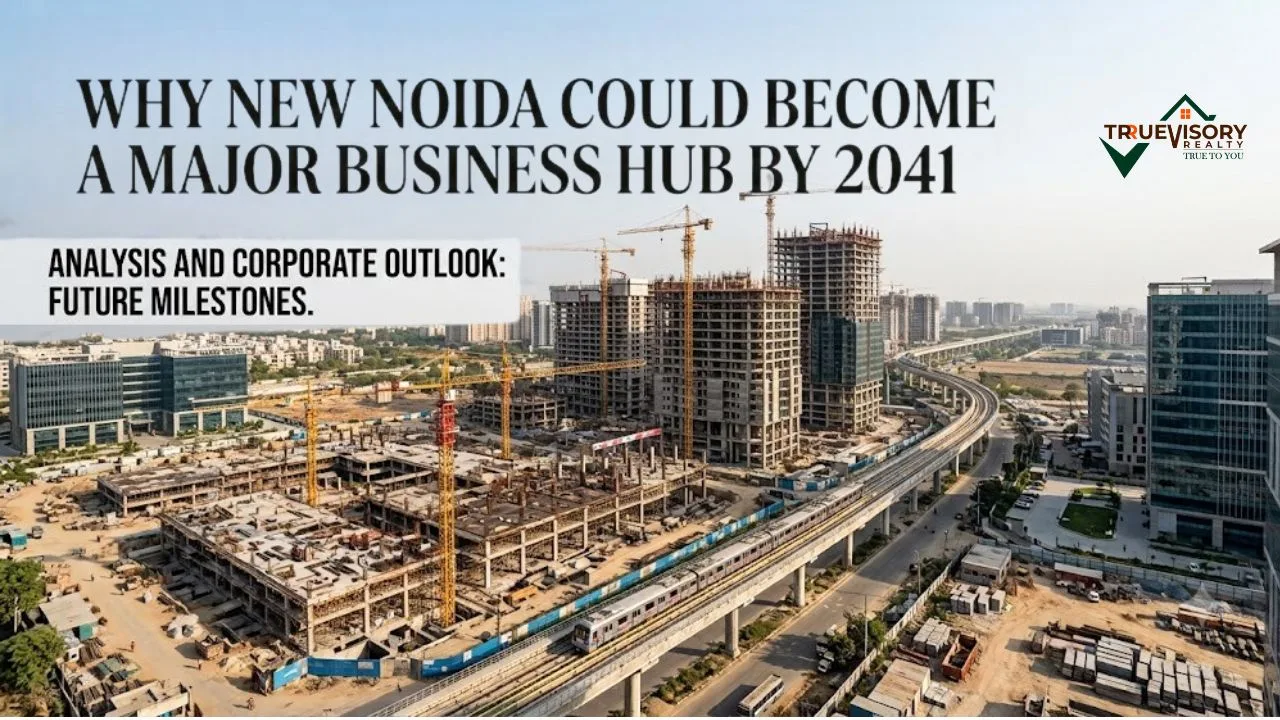

The Indian real estate landscape is shifting rapidly, leaving many investors to wonder if their capital is safe. As urban centers expand, choosing the right asset class becomes crucial for long-term wealth.
Many experts now look toward the National Capital Region for growth. Specifically, commercial property in Noida has become a focal point for those seeking steady returns. However, deciding if this market remains a smart choice requires a careful look at current trends.
Success in this sector depends on several moving parts. You must consider the specific location, current tenant demand, and the overall quality of the project. Your investment horizon and tolerance for vacancy risk will ultimately determine if this path is right for you.
Key Takeaways
- Market growth is heavily influenced by infrastructure development and corporate migration.
- Location remains the most critical factor for ensuring consistent rental yields.
- Investors must balance potential capital appreciation against the risk of project delays.
- Tenant demand is currently shifting toward high-quality, sustainable office spaces.
- A long-term perspective is essential to navigate short-term market fluctuations effectively.
Why Commercial Property in Noida Still Deserves Investor Attention
Navigating the landscape of commercial property investment in Noida requires a shift from blind optimism to calculated precision. While the region has seen rapid growth, success is not guaranteed by market trends alone. Investors must prioritize data-driven insights to ensure long-term stability.
The case for an opinion-based investment decision
Broad market optimism often masks the risks inherent in specific micro-markets. Instead of following the crowd, savvy investors evaluate projects based on specific utility and local demand drivers. A selective approach helps in identifying assets that offer genuine value rather than speculative potential.
"Real estate is not just about the land; it is about the ecosystem that supports the business operations within that space." — Anonymous Industry Analyst
How Noida differs from other Delhi-NCR commercial markets
Noida stands out in the Delhi-NCR region due to its planned infrastructure and wide road networks. Unlike older, congested parts of the capital, Noida offers organized commercial corridors that appeal to modern corporate occupiers. This structural advantage creates a unique environment for sustainable business growth.
The following table highlights why this region remains a focal point for institutional capital compared to neighboring areas:
|
Feature |
Noida Commercial |
Traditional NCR Markets |
|
Infrastructure |
Planned & Modern |
Legacy & Congested |
|
Road Connectivity |
High-Speed Expressways |
Limited Arterial Access |
|
Land Availability |
Organized Zoning |
Fragmented Ownership |
|
Growth Potential |
High (Expansion Phase) |
Moderate (Saturation) |
What “smart investment” should mean beyond price appreciation
A truly smart investment must look past simple capital gains. Investors should focus on rental yield, occupancy potential, and legal clarity to protect their downside. Liquidity remains a critical factor, as the ability to exit an asset is just as important as the initial purchase.
By prioritizing commercial property investment in Noida through the lens of tenant quality and lease durability, you build a resilient portfolio. True wealth in this sector comes from consistent cash flow and the long-term appreciation of well-managed, high-demand assets.
Market Trends Shaping Commercial Real Estate in Noida
The landscape of commercial real estate in Noida is currently undergoing a significant transformation driven by diverse economic forces. These shifts are redefining how businesses operate and how investors approach the market. By analyzing these trends, stakeholders can better navigate the complexities of this high-growth region.
Office demand from technology, outsourcing, and corporate occupiers
Noida has emerged as a premier hub for IT and ITeS companies seeking high-quality infrastructure. Corporate occupiers are increasingly favoring modern office spaces that offer superior connectivity and amenities. This consistent demand from the technology and outsourcing sectors remains a primary driver for office space absorption.
Retail expansion driven by population growth and consumption
The rapid expansion of residential catchments in areas like Greater Noida West has triggered a surge in retail demand. As the local population grows, the need for daily-use retail and destination-led shopping centers has skyrocketed. Investors are now focusing on high-street models that cater to the evolving spending habits of local residents.
How supply, vacancy, and construction activity affect pricing
Pricing power within commercial real estate in Noida is heavily influenced by the balance between new supply and actual absorption. High vacancy rates in certain corridors often lead to competitive rental pricing, which can be a double-edged sword for investors. Monitoring construction activity is vital, as a sudden influx of inventory can temporarily dampen capital appreciation.
The influence of institutional developers and organized commercial projects
The entry of institutional developers has brought a new level of professionalism to the market. These players prioritize organized commercial projects that feature better maintenance, security, and long-term asset management. Consequently, properties developed by reputable firms often command a premium and offer greater stability for long-term investors.
Infrastructure and Connectivity That Support Noida’s Commercial Outlook
Noida’s rapid transformation into a commercial powerhouse is largely driven by its world-class infrastructure. The city has evolved into a preferred destination for global corporations and local businesses alike. This growth is not accidental but the result of deliberate planning and massive capital investment in transit networks.
Noida-Greater Noida Expressway and its effect on business locations
The expressway acts as the primary artery for the city's economic expansion. It links major corporate hubs directly to the heart of the National Capital Region. Investors seeking a commercial property on noida expressway often find that the high visibility and seamless transit access drive consistent rental demand.
Businesses located along this corridor benefit from reduced commute times for their workforce. This accessibility is a critical factor for multinational companies that prioritize employee retention and operational efficiency. Consequently, the area has become a magnet for high-end office spaces and institutional developments.
Noida International Airport and long-term commercial expectations
The upcoming Jewar International Airport represents a massive shift in the regional economic landscape. It promises to turn Noida into a global logistics and business gateway. Long-term investors view this project as a catalyst for sustained capital appreciation across the southern sectors.
The airport will likely attract industries that rely on rapid connectivity, such as electronics manufacturing and high-value logistics. As the project nears completion, the demand for support services and commercial infrastructure is expected to rise significantly. This development creates a long-term value proposition for early-stage investors.
Metro expansion, road networks, and access to Delhi and Ghaziabad
The expansion of the Aqua Line and its integration with the Blue Line has revolutionized local mobility. These transit links provide reliable access to Delhi and Ghaziabad, effectively shrinking the distance between residential catchments and commercial zones. Enhanced road networks further ensure that goods and services move without significant bottlenecks.
Reliable public transport is a major advantage for retail and service-oriented businesses. It ensures a steady flow of footfall, which is essential for the success of high-street projects. When infrastructure is robust, the risk of vacancy decreases, providing a safer environment for capital deployment.
Why connectivity benefits some sectors more than others
While connectivity is universally positive, its impact varies by property format. Office spaces thrive on proximity to metro stations, while warehouses prioritize access to heavy-duty road networks. Understanding these nuances is vital for making an informed investment decision regarding any commercial property on noida expressway or beyond.
|
Property Type |
Primary Infrastructure Need |
Key Benefit |
Market Sensitivity |
|
Corporate Offices |
Metro & Expressway |
Employee Commute |
High |
|
Retail/High-Street |
Road Networks |
Customer Footfall |
Very High |
|
Warehousing |
Highway Access |
Logistics Efficiency |
Moderate |
|
Healthcare/Service |
Local Connectivity |
Patient/Client Reach |
Moderate |
Which Commercial Property in Noida Formats Have the Strongest Potential?
Choosing the right commercial asset in Noida requires a deep understanding of how different property formats serve specific business needs. Investors must look beyond surface-level trends to identify which commercial projects in Noida offer the most sustainable growth. Success often hinges on aligning your investment with the evolving requirements of modern occupiers.
Office space in Noida for established companies and flexible businesses
The demand for office space in Noida remains robust, driven by both multinational corporations and agile startups. Established firms typically prioritize large, contiguous floor plates and premium amenities that support long-term operations. Conversely, flexible businesses often seek co-working environments that offer scalability and lower upfront capital expenditure.
Retail shops in Noida for daily-use and destination-led demand
Retail assets generally fall into two distinct categories: daily-use convenience and destination-led experiences. Daily-use shops thrive in high-density residential catchments where footfall is consistent and predictable. Destination-led retail, however, relies on unique architecture and anchor tenants to draw visitors from across the city.
Commercial projects in Noida with mixed-use and high-street models
Modern commercial projects in Noida increasingly favor mixed-use developments that blend office, retail, and hospitality. These models create a synergistic environment where tenants benefit from shared infrastructure and constant activity. High-street formats remain a favorite for investors due to their visibility and the premium rental rates they command.
Warehousing, healthcare, education, and service-sector opportunities
Beyond traditional offices and shops, niche sectors offer significant potential for long-term yield. Warehousing is gaining traction due to the rise of e-commerce, while healthcare and education facilities provide stable, long-term lease agreements. These sectors often require specialized infrastructure, which can act as a barrier to entry for competitors.
|
Property Type |
Primary Tenant |
Key Driver |
|
Office Space |
Corporate/IT |
Connectivity & Amenities |
|
Retail Shop |
Retailers/F&B |
Footfall & Visibility |
|
Warehousing |
Logistics/E-commerce |
Access & Floor Load |
How tenant requirements should influence property selection
Your selection process must prioritize the specific needs of the end-user to ensure low vacancy rates. Consider the following factors when evaluating any asset:
- Loading and Access: Essential for retail and warehousing units to ensure smooth operations.
- Parking Ratios: A critical factor for office tenants who require adequate space for employees and visitors.
- Utility Infrastructure: Reliable power, water, and high-speed internet are non-negotiable for modern businesses.
- Floor Plate Efficiency: Maximizing usable space is vital for maintaining competitive rental yields.
Commercial Property in Noida: Comparing Key Micro-Markets
Noida’s commercial landscape is far from uniform, requiring a deep dive into specific micro-markets to find true value. Investors often make the mistake of treating the city as a single entity, but the reality is that each corridor serves a distinct economic purpose. Understanding these nuances is essential for anyone looking to purchase retail shops in noida or office spaces.
Sector 62 for established office and institutional demand
Sector 62 stands as a cornerstone of Noida’s commercial growth. It benefits from high occupancy rates due to its proximity to the Delhi-Meerut Expressway and the Blue Line Metro. This area primarily attracts IT firms, educational institutions, and corporate headquarters that require stable, long-term infrastructure.
Sectors 132, 135, and 142 along the Noida Expressway
The Noida-Greater Noida Expressway corridor has transformed into a hub for modern corporate parks and tech-driven businesses. These sectors are characterized by large, glass-fronted office complexes that cater to multinational corporations. While office demand dominates here, the influx of employees has created a secondary need for high-end shops in noida that provide food, beverage, and convenience services.
Sector 18 and central Noida for mature retail activity
Sector 18 remains the undisputed heart of retail in the city. As a mature market, it offers high footfall and established brand presence, making it a safe bet for investors seeking consistent rental income. Unlike emerging areas, this zone has a proven track record of sustaining high-street retail activity over several decades.
Greater Noida West and emerging residential catchments
Greater Noida West represents the future of volume-driven commercial investment. As thousands of families move into new residential projects, the demand for daily-use retail shops in Noida has skyrocketed. This micro-market is ideal for investors who prioritize high growth potential over immediate, premium rental yields.
Why location quality matters more than a broad Noida label
A project’s general branding as a "Noida property" does not guarantee success. Investors must look at the specific micro-market dynamics, such as catchment area, road connectivity, and existing competition. Relying on citywide averages often leads to poor decision-making, as the performance of shops in noida varies drastically between a mature hub like Sector 18 and a developing zone like Greater Noida West.
|
Micro-Market |
Primary Asset Type |
Investment Driver |
Risk Profile |
|
Sector 62 |
Office/Institutional |
Metro Connectivity |
Low |
|
Expressway (132-142) |
Corporate/Tech |
Corporate Occupancy |
Moderate |
|
Sector 18 |
Retail/High-Street |
Established Footfall |
Low |
|
Greater Noida West |
Neighborhood Retail |
Residential Growth |
High |
What Commercial Property ROI in Noida Can Realistically Look Like
Evaluating the commercial property ROI in Noida involves more than just looking at the initial purchase price. Investors must weigh several moving parts to determine if a project aligns with their long-term financial goals.
Rental yield, capital appreciation, and total return
Total return is the sum of two primary drivers: annual rental income and the growth in property value over time. While rental yields provide steady cash flow, capital appreciation often accounts for the bulk of wealth creation in high-growth corridors.
- Rental Yield: The annual rent divided by the property cost.
- Capital Appreciation: The increase in market value based on infrastructure and demand.
- Total Return: The combined benefit of both income and asset growth.
Calculating rental income from commercial property after expenses
Calculating the true commercial property ROI in Noida requires a deep dive into net operating income. You must subtract recurring costs from your gross rental receipts to find the actual profit margin.
Common expenses that impact your bottom line include:
- Property taxes and municipal charges.
- Maintenance fees for common areas and security.
- Insurance premiums and potential management costs.
- Financing interest if the purchase was leveraged.
Comparing office, retail, and pre-leased investment returns
Different asset classes offer distinct risk-reward profiles. Office spaces often provide stable, long-term corporate tenants, while retail units may offer higher potential yields due to high footfall in prime locations.
Pre-leased properties are popular because they offer immediate cash flow. However, they often come with a higher entry price, which can compress the overall yield compared to buying an empty unit and securing a tenant yourself.
How entry price, lease terms, and vacancy change the outcome
Your entry price is the most critical factor in determining your long-term success. If you pay a premium during a market peak, your yield will naturally be lower, regardless of how well the property performs.
Lease terms also play a vital role in stability. A long-term lease with a reputable brand provides security, but you must account for potential vacancy periods between tenants. Empty units do not generate income, and they still incur maintenance costs that erode your total return.
Why advertised returns should not be treated as guaranteed performance
Many developers promote attractive figures to entice buyers, but these numbers often ignore real-world variables. You should treat these projections as estimates rather than fixed outcomes for your commercial property ROI in Noida.
Always conduct your own analysis by verifying current market rents in the specific micro-market. Relying on independent data ensures that your investment strategy remains grounded in reality rather than marketing promises.
Rental Demand and Tenant Quality as the Core Investment Test
Beyond the glossy brochures, the stability of your rental income from commercial property depends on specific operational factors. While location and architecture attract initial interest, the long-term viability of an asset rests entirely on the occupant's ability to sustain their business operations.
Evaluating tenant profiles and business durability
A high-quality tenant is the bedrock of a successful investment. You should prioritize businesses with a proven track record, strong balance sheets, and a clear need for the specific space they occupy.
Business durability is not just about current profits; it is about the tenant's resilience against market shifts. Before finalizing a deal, verify the nature of their operations and their standing within the local Noida market to ensure they are not a flight risk.
Lease duration, escalation clauses, deposits, and renewal terms
The structure of your lease agreement acts as your primary legal safeguard. A well-drafted contract ensures that your rental income from commercial property remains predictable and protected against inflation.
Consider these essential components when negotiating your lease:
- Lease Duration: Aim for longer lock-in periods to minimize turnover costs.
- Escalation Clauses: Include annual or biennial rent increases to keep pace with market trends.
- Security Deposits: Ensure the deposit covers at least three to six months of rent.
- Renewal Terms: Clearly define the notice period and the mechanism for rent revision upon renewal.
Understanding maintenance charges, common-area costs, and taxes
Investors often underestimate the impact of recurring expenses on their net returns. Maintenance charges and common-area maintenance (CAM) fees are frequently passed on to tenants, but you must ensure these clauses are explicitly stated in the lease.
Failure to clarify who pays for property taxes or building insurance can lead to unexpected financial burdens. Always perform a thorough audit of the project's expense structure to ensure your net yield is not being silently eroded by hidden operational costs.
How vacancy risk can erase an attractive projected yield
Vacancy is the single greatest threat to your rental income from commercial property. Even a property with a high theoretical yield can become a liability if it sits empty for months between tenants.
Vacancy risk includes not only the loss of monthly rent but also the ongoing burden of maintenance fees and property taxes that you must cover while the unit is vacant. You should always maintain an emergency reserve fund to bridge these gaps, ensuring that your investment remains solvent even during periods of market cooling or tenant transition.
The Main Risks Behind Noida Commercial Property Investment
Navigating the landscape of commercial property in Noida involves more than just spotting a prime location; it requires a deep dive into market vulnerabilities. While the region shows significant promise, investors must remain vigilant regarding factors that could impact their long-term returns.
Oversupply and uneven absorption across commercial corridors
One of the primary concerns for investors is the sheer volume of new inventory entering the market. In some corridors, the supply of office and retail space has outpaced the current demand from businesses.
This imbalance leads to uneven absorption rates, where certain high-street projects thrive while others struggle to find tenants. Investors should carefully analyze whether a specific micro-market has enough corporate activity to support the available square footage.
Delayed possession, construction risk, and developer execution
Construction delays remain a persistent challenge in the real estate sector. When a developer fails to meet project timelines, the investor’s capital remains locked without generating any rental income.
Weak developer execution can also lead to poor maintenance standards, which negatively impacts the long-term value of a commercial property in Noida. It is vital to verify the track record of the builder before committing to any pre-launch or under-construction project.
Liquidity challenges when selling shops or office units
Unlike residential assets, commercial units often face lower liquidity, especially for smaller shops or individual office suites. Finding a buyer who is willing to pay a premium can take significant time, particularly if the market is saturated.
Investors often find that demand from end-users is much lower than speculative investor demand. This discrepancy can make it difficult to exit an investment quickly during a market downturn.
Regulatory, title, and authorization concerns
Legal due diligence is the backbone of a secure investment. Issues regarding land titles, zoning authorizations, or pending government approvals can lead to severe financial and legal complications.
Investors must ensure that the project complies with all local regulations to avoid future disputes. A clear title is non-negotiable when purchasing any commercial asset in the region.
How changing work patterns may affect office demand
The rise of hybrid work models has fundamentally shifted how companies view office space. Many firms are now prioritizing flexible layouts over traditional, large-scale office setups.
This shift could potentially lower the demand for conventional office units in the long run. Investors should consider whether their chosen commercial property in Noida offers the flexibility required by modern, agile businesses.
|
Risk Factor |
Impact Level |
Mitigation Strategy |
|
Market Oversupply |
High |
Focus on established corridors |
|
Construction Delays |
Medium |
Verify developer track record |
|
Liquidity Issues |
High |
Prioritize prime, high-footfall areas |
|
Regulatory Hurdles |
Critical |
Conduct thorough legal due diligence |
Due Diligence Before Buying Property in Noida
Before you finalize any deal for a property in Noida, you must conduct a thorough investigation to protect your financial interests. Marketing brochures often highlight potential returns, but they rarely disclose the underlying legal or structural risks. A systematic approach to verification ensures that your investment remains secure and profitable over the long term.
Verifying title, land use, approvals, and completion status
The foundation of any safe transaction is a clear title. You should verify that the land is free from litigation and that the developer holds the legal right to sell the unit. Always check the land use certificate to confirm the site is zoned for commercial activity rather than residential or industrial use.
Reviewing RERA registration and the developer’s delivery record
The Real Estate Regulatory Authority (RERA) provides a transparent view of project timelines and financial health. You must confirm that the property in Noida is registered under RERA and that the developer has a proven track record of timely delivery. Reviewing past projects helps you gauge the builder's ability to manage construction phases without significant delays.
Checking lease documents, tenant obligations, and rent guarantees
If you are buying a pre-leased unit, the lease agreement is your most important document. Examine the lock-in period, escalation clauses, and the tenant's financial stability. Be wary of "rent guarantees" that seem too good to be true, as these are often inflated to mask low market demand.
Estimating registration costs, financing expenses, and tax exposure
Beyond the base price, you must account for hidden costs that impact your net yield. These include stamp duty, registration fees, GST, and ongoing maintenance charges. Creating a detailed budget helps you avoid liquidity issues during the ownership phase.
Why independent legal and financial advice is worth the cost
Professional experts can identify red flags that an average buyer might overlook. They provide an objective assessment of the contract terms and tax implications. Investing in a professional review is a small price to pay for peace of mind when purchasing a property in Noida.
|
Due Diligence Category |
Key Verification Item |
Risk Level |
|
Legal Status |
Title Deed & Land Use |
High |
|
Regulatory |
RERA Registration |
Medium |
|
Financial |
Tax & Registration Fees |
Low |
|
Contractual |
Lease & Tenant Terms |
High |
How Investors Can Choose Among the Best Commercial Projects in Noida
Identifying the best commercial projects in Noida demands a disciplined approach that looks past glossy brochures and aggressive marketing campaigns. Savvy investors focus on operational fundamentals rather than speculative promises. By prioritizing tangible metrics, you can significantly reduce your exposure to market volatility.
Matching the property type to the investor’s risk tolerance
Your investment strategy should align with your personal financial goals and risk appetite. Conservative investors often prefer pre-leased office spaces in established sectors, as these provide immediate, predictable cash flow. Conversely, those with a higher risk tolerance might explore under-construction retail units in emerging corridors, which offer higher potential for capital appreciation.
Prioritizing footfall, frontage, parking, and access over promotional claims
When evaluating the best commercial projects in Noida, the physical attributes of the property are non-negotiable. High visibility and easy access are the primary drivers of long-term tenant retention. You should verify the following site-specific factors before committing capital:
- Footfall potential: Proximity to residential catchments or major transit hubs.
- Frontage: Wide, unobstructed visibility from main arterial roads.
- Parking: Adequate basement or surface parking ratios to accommodate peak business hours.
- Access: Ease of entry and exit for both vehicles and pedestrians.
Assessing developer credibility and project-level financial transparency
Developer track record serves as the most reliable indicator of project success. Research the builder’s history of timely delivery and their ability to manage complex commercial developments. Transparency regarding project funding and clear title documentation is essential to avoid legal complications later.
Building a purchase budget with an emergency vacancy reserve
A common mistake involves underestimating the total cost of ownership. Beyond the initial purchase price, you must account for registration fees, maintenance charges, and potential tax liabilities. It is vital to maintain an emergency vacancy reserve that covers at least six to twelve months of operating expenses.
This financial buffer protects you during periods of tenant turnover or unexpected repairs. By planning for these contingencies, you ensure that your investment in the best commercial projects in Noida remains sustainable even during market downturns.
My Verdict on Noida Real Estate Investment Today
Deciding on a path for your capital requires a clear-eyed look at the current market landscape. While noida real estate investment offers significant potential, it is not a universal solution for every portfolio. Success depends on aligning your financial goals with the specific realities of the local commercial sector.
When commercial property investment in Noida makes sense
Commercial assets become a logical choice when you prioritize long-term rental yields over immediate liquidity. This path is ideal if you have identified projects with high-quality tenants and stable lease agreements. When the property is located in a high-growth corridor, the potential for capital appreciation remains strong.
When investors should prefer residential property or other assets
You might find that residential property or liquid financial assets better suit your needs if you require quick access to your capital. Commercial units often suffer from lower liquidity, making them difficult to sell during a market downturn. If your risk tolerance is low or you lack the time to manage tenant relationships, sticking to residential or diversified mutual funds is a safer bet.
Why selective buying is more defensible than a market-wide bet
A broad, market-wide approach to noida real estate investment is rarely effective. Instead, you should focus on selective buying in areas with proven infrastructure and high footfall. Prioritizing projects with transparent documentation and reputable developers significantly reduces your exposure to unnecessary risks.
The investor profile most likely to benefit from commercial assets
The ideal investor for commercial property is typically a high-net-worth individual with a patient holding period. These investors understand that commercial real estate is a marathon, not a sprint. They possess the financial cushion to handle temporary vacancy periods without compromising their overall wealth strategy.
|
Investor Profile |
Preferred Asset Class |
Primary Goal |
Risk Tolerance |
|
Conservative |
Residential / FDs |
Capital Preservation |
Low |
|
Growth-Oriented |
Commercial / Equities |
Capital Appreciation |
Moderate |
|
Institutional |
Grade-A Commercial |
Stable Rental Yield |
High |
Conclusion
Investing in commercial property in noida requires a disciplined approach that prioritizes long-term value over quick gains. Success depends on your ability to analyze tenant demand, infrastructure growth, and project quality before committing capital.
You should focus on comparing micro-markets and calculating net returns after accounting for all operational expenses. Verifying legal documentation and RERA status remains a critical step to protect your financial interests. Preparing for potential vacancy periods or construction delays ensures you maintain a realistic outlook on your portfolio performance.
Selective, research-led buying serves as a more defensible strategy than assuming every commercial property in noida will yield high appreciation. By aligning your budget with verified financial assumptions, you position yourself to make informed decisions in a competitive market. Reach out to local experts or legal advisors to validate your findings before finalizing any transaction.