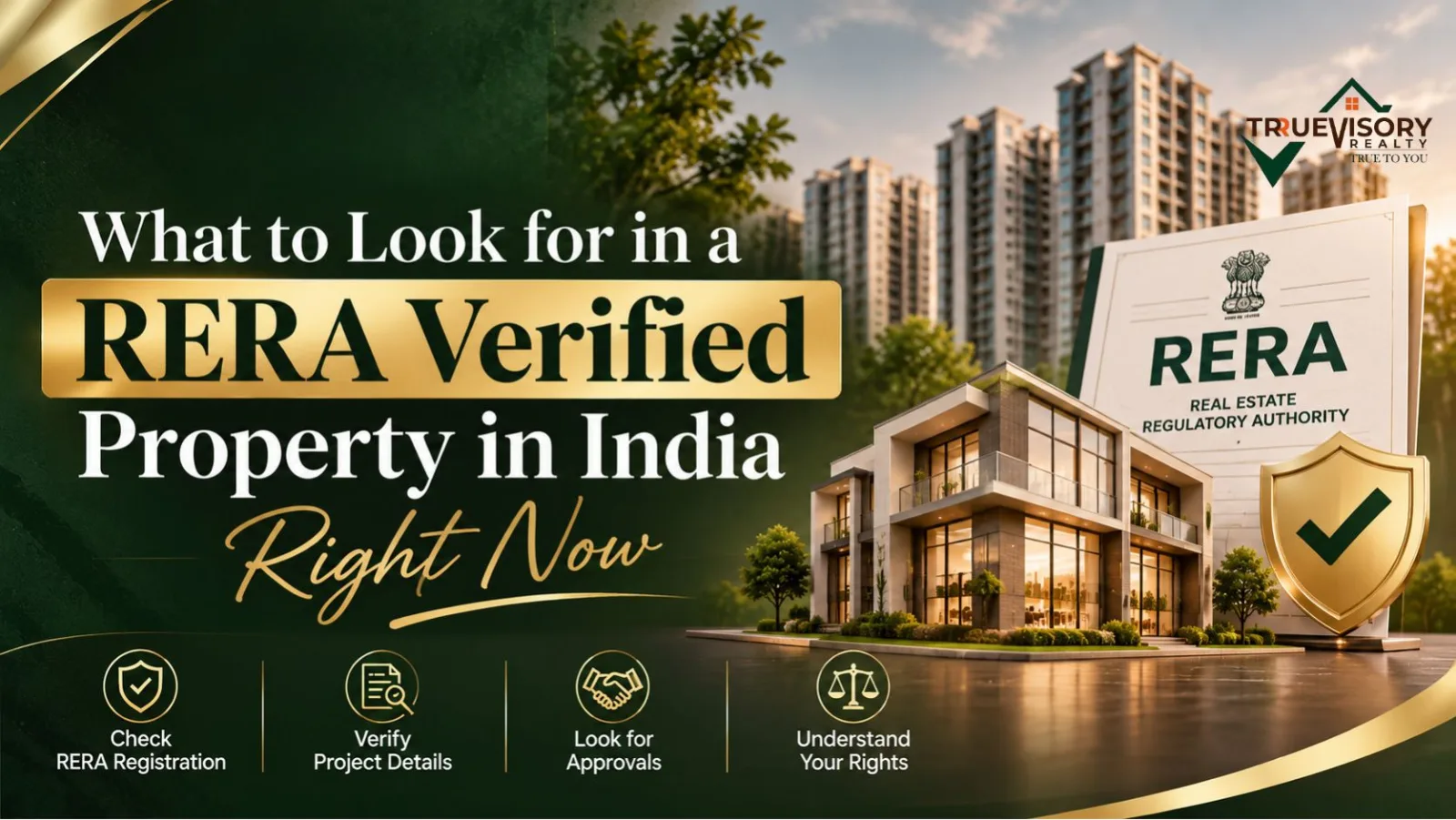
Buying a property is one of the most significant financial decisions in an individual's life. Whether you are purchasing a residential apartment, commercial space, or residential plot, ensuring the property's legal authenticity and developer credibility is essential. With the growth of India's real estate sector, buyers have become increasingly aware of the importance of transparency, legal compliance, and financial security. This is where a RERA Verified Property in India becomes important.
The Real Estate (Regulation and Development) Act, 2016, commonly known as RERA, was introduced to protect homebuyers and promote transparency in the real estate industry. It establishes regulatory authorities across states and provides a framework for monitoring registered real estate projects.
However, simply finding a RERA registration number is not enough. Buyers must understand what to verify before making an investment. Let's explore the important factors to consider when choosing a RERA registered property in India.
What Is a RERA Verified Property?
A RERA verified property refers to a real estate project registered with the respective state's Real Estate Regulatory Authority under applicable RERA provisions.
The Act requires promoters to register projects that fall within its applicability before advertising, marketing, booking, or selling them. Generally, projects exceeding 500 square metres of land area or involving more than eight apartments, inclusive of all phases, require registration, subject to applicable state rules.
RERA registration helps buyers access important project information, including developer details, approved plans, project timelines, and construction progress.
It is important to understand that RERA registration does not automatically guarantee investment returns, construction quality, or zero project risk. Buyers must independently verify all relevant documents.
10 Important Things to Check Before Buying a RERA Verified Property in India
1. Verify the RERA Registration Number
The first step is to check whether the project is officially registered with the relevant state RERA authority.
Every registered project receives a unique registration number. Buyers should visit the official state RERA website and search using the project name, promoter name, or registration number.
Check the following details:
- Whether the registration number is genuine and valid.
- Whether the registered promoter's name matches the developer.
- Whether the project address matches the property being advertised.
- Whether the registration is active, extended, expired, or revoked.
- Whether the specific project phase is registered.
Never rely solely on a registration number displayed in advertisements or brochures.
2. Check the Legal Ownership of the Land
Land ownership is one of the most important aspects of property verification. Even if a project has RERA registration, buyers should independently examine the land title and ownership documents.
Important documents to review include:
- Title deed and ownership records.
- Encumbrance certificate, where applicable.
- Land-use conversion or relevant land-use permissions.
- Joint development agreement, if applicable.
- Previous ownership and transfer records.
A clear land title helps reduce the risk of ownership disputes and future legal complications.
3. Examine Approved Layout Plans and Building Permissions
Before purchasing a property, verify whether the developer has received the necessary approvals from the competent planning or development authority.
Compare the approved layout plan with the actual project specifications.
Check for:
- Approved building and layout plans.
- Commencement certificate, wherever applicable.
- Floor plans and unit specifications.
- Approved construction area.
- Parking and common-area provisions.
- Environmental and other applicable clearances.
Any major difference between the approved plan and the developer's promotional commitments should be investigated.
4. Review the Builder's Track Record
The reputation and previous performance of a developer can significantly influence your property-buying experience.
Before investing, research the builder's previous and ongoing projects.
Consider these factors:
- Previous project delivery timelines.
- Quality of construction and amenities.
- Customer reviews and feedback.
- Pending legal disputes and RERA complaints.
- Financial and operational credibility.
- History of project delays.
A developer with a consistent delivery record and transparent communication can offer greater confidence to buyers.
5. Check Project Completion Date and Construction Progress
Project delays can create financial and personal difficulties for property buyers. Therefore, checking the proposed completion date is essential.
RERA portals provide project information and periodic progress updates that help buyers understand the development status.
Compare the following:
|
Factor |
What Buyers Should Check |
|
Project launch |
Original registration date |
|
Completion date |
Declared completion timeline |
|
Construction status |
Actual progress versus planned progress |
|
Quarterly updates |
Latest project progress reports |
|
Registration extension |
Whether the completion date has been officially extended |
|
Possession |
Expected and legally applicable possession timeline |
Avoid relying entirely on verbal possession promises. Always compare the builder's commitments with official project records.
6. Understand the Payment Plan and Financial Structure
Financial transparency is another important aspect of buying a RERA registered property.
Before paying any booking amount, carefully examine the payment schedule, additional charges, and financial commitments.
Under Section 13 of the RERA Act, a promoter cannot accept more than 10% of the cost of an apartment, plot, or building as an advance or application fee without first entering into a written agreement for sale.
Buyers should also check:
- Total property cost.
- Booking amount and instalment schedule.
- GST and applicable government charges.
- Maintenance and parking charges.
- Other additional costs.
- Project's designated collection account.
Understand the complete financial commitment rather than focusing only on the advertised property price.
7. Verify Carpet Area and Property Specifications
One of the major advantages of RERA is its standardised definition of carpet area.
Carpet area refers to the net usable floor area of an apartment, excluding external walls, service shafts, exclusive balcony or verandah areas, and exclusive open terrace areas, but including internal partition walls.
Before finalising a property, compare the carpet area mentioned in the agreement with the actual unit specifications.
Also verify the number of bedrooms, bathrooms, balconies, parking arrangements, and promised amenities.
8. Check RERA Complaints and Legal Disputes
A project's registration status alone does not reveal its complete legal and operational history.
Buyers should investigate whether the developer has faced complaints, regulatory proceedings, or adverse orders.
Check the following:
- Number and nature of buyer complaints.
- Pending RERA cases.
- Previous regulatory orders.
- Disputes related to possession or construction.
- Complaints involving misleading advertisements.
A careful review of these records can help identify potential warning signs before investing.
9. Verify Completion Certificate and Occupancy Certificate
For ready-to-move properties, checking the Completion Certificate (CC) and Occupancy Certificate (OC), wherever applicable, is essential.
These certificates serve different purposes:
Completion Certificate (CC): Confirms that construction has been completed in accordance with the approved plans and applicable requirements.
Occupancy Certificate (OC): Indicates that the building is fit for occupation as per the relevant authority's requirements.
Buyers should verify the applicable certificates with the concerned authority instead of depending only on the developer's statements.
10. Check the Agreement for Sale Before Booking
The Agreement for Sale is an important legal document that defines the relationship between the buyer and developer.
Read every clause carefully before signing.
Pay attention to:
- Total sale consideration.
- Payment milestones.
- Possession date.
- Delay-related compensation provisions.
- Specifications and amenities.
- Cancellation and refund conditions.
- Rights and responsibilities of both parties.
If required, consult a qualified property lawyer to review the agreement.
How to Check RERA Registration Online in India?
Checking RERA registration online is a straightforward process.
Follow these steps:
- Identify the state in which the property is located.
- Visit the official RERA website of that state.
- Open the registered projects or project search section.
- Enter the project name, promoter name, or RERA registration number.
- Check the registration validity and project details.
- Review the approved plans, progress reports, completion date, and available legal information.
- Save the relevant documents for future reference.
For properties in Noida and Greater Noida, buyers can use the official Uttar Pradesh RERA portal: https://www.up-rera.in/
Key Documents to Check Before Buying a RERA Registered Property
|
Document |
Why It Is Important |
|
RERA Registration Certificate |
Confirms project registration |
|
Land Title Documents |
Establishes ownership rights |
|
Approved Layout Plan |
Verifies project planning |
|
Building Approvals |
Confirms necessary permissions |
|
Encumbrance Certificate |
Helps identify registered liabilities |
|
Agreement for Sale |
Defines buyer and developer obligations |
|
Completion Certificate |
Verifies construction completion |
|
Occupancy Certificate |
Helps establish lawful occupation |
|
Payment Receipts |
Provides proof of transactions |
Why Choose Truevisory Realty for Your Property Investment?
Choosing the right property requires more than comparing prices and attractive advertisements. Buyers need reliable information, market understanding, and proper guidance throughout the property selection process.
Truevisory Realty helps property buyers explore real estate opportunities in Noida and understand important factors before making an investment decision. From identifying suitable residential and commercial properties to understanding project specifications, location advantages, and investment considerations, Truevisory Realty focuses on helping customers make informed property decisions.
With a customer-centric approach and an understanding of the Noida real estate market, Truevisory Realty aims to make the property-buying journey more transparent, convenient, and well-informed. Whether you are searching for a property for personal use or long-term investment, the right guidance can help you evaluate opportunities more effectively.
Explore available properties at or connect with the Truevisory Realty team for property-related assistance.
Conclusion
Purchasing a RERA Verified Property in India is an important step towards making a more informed real estate decision. However, buyers should not consider RERA registration the only deciding factor.
Verifying land ownership, project approvals, builder credentials, construction progress, payment schedules, and legal documentation is equally important.
Whether you are investing in Noida, Greater Noida, Delhi-NCR, or another growing real estate market in India, proper research and professional guidance can help you minimise risks and make better property decisions.
Before finalising any property, take the time to verify its documents, understand the agreement, and evaluate the developer's track record. A well-researched investment today can help you make a more confident property decision for tomorrow.